 how-to
Why Seasonal Menus Matter for Fine Dining
Table of Contents
- Why Seasonal Menus Matter for Fine Dining
- The Benefits of Seasonal Menus for Restaurants and Diners
- Seasonal Ingredients in Fine Dining: What Changes on the Plate
- Seasonal Menu Planning for Restaurants: How Chefs Build a Menu
- Seasonal Menu Examples From a Chef-Driven Kitchen
- What Seasonal Menus Signal About a Restaurant's Standards
- How Often Should a Fine Dining Menu Change?
- Conclusion
- Frequently Asked Questions
Last Updated: October 7, 2026
Why Seasonal Menus Matter for Fine Dining
A seasonal menu is a restaurant's promise that what reaches your table was chosen at its peak, not pulled from a freezer in January. For fine dining, that promise separates a memorable meal from an expensive one. At Siena Restaurant in Alpharetta, GA, our kitchen is built around this idea: handcrafted pasta, Mediterranean plates, and wood-fired flavors that shift as local farms shift. Below, we'll show you exactly how seasonal cooking works, why it costs more to do right, and how to spot a kitchen that actually means it.
Here is the short answer: seasonal menus matter because they deliver better flavor, support local farms, and signal that a kitchen cares about standards, not shortcuts. A tomato in August tastes like a tomato. A tomato in February tastes like nothing, no matter what a chef does to it.
That difference shows up on the plate, and it shows up in how a restaurant runs.
The Benefits of Seasonal Menus for Restaurants and Diners
The benefits of seasonal menus run in two directions. Diners get food at peak flavor and freshness. Restaurants get better ingredients at better value, plus a reason for guests to return.
For diners, the wins are simple:
- Produce picked at ripeness tastes sweeter and more complex
- Dishes change, so regulars always find something new
- Local sourcing means shorter travel time from farm to plate
For restaurants, the math works differently than most people assume. Peak-season produce often costs less than out-of-season imports. But the real payoff is trust. A guest who loves your September squash dish comes back in October to see what's next.
That repeat visit is the whole game in fine dining. One-and-done diners don't keep a chef-driven kitchen alive.
Seasonal Ingredients in Fine Dining: What Changes on the Plate
Seasonal ingredients in fine dining are the specific produce, herbs, and proteins available at their peak during a given time of year. In practice, that means the plate changes with the calendar, not just the garnish.
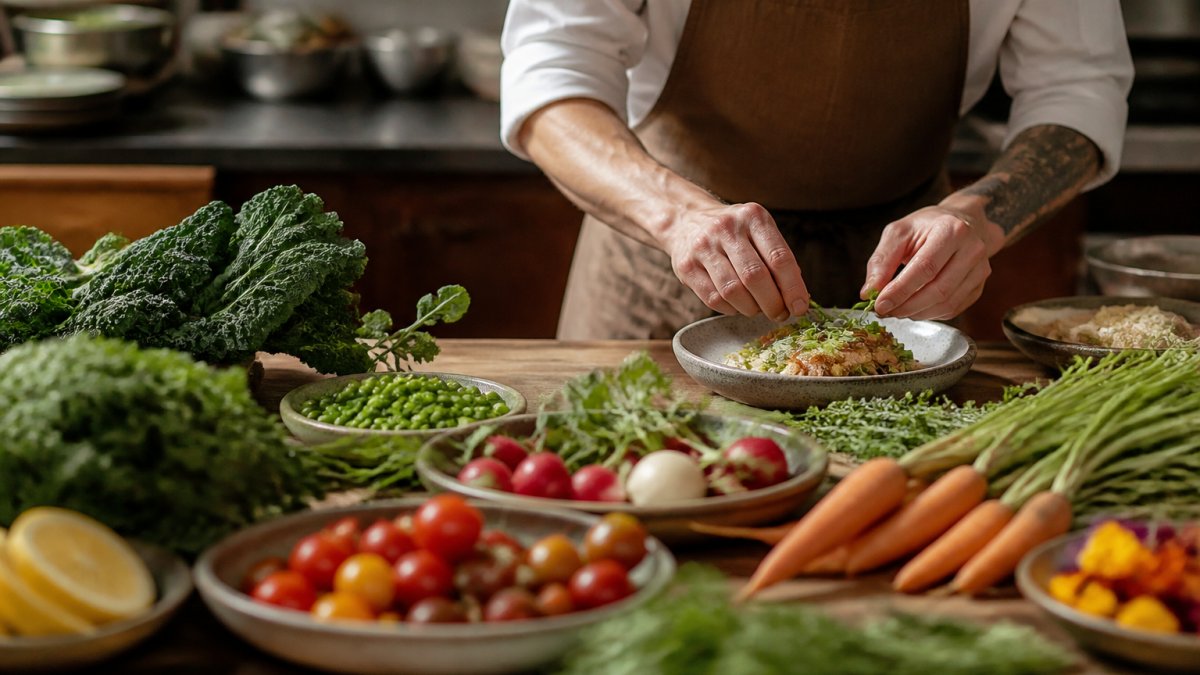
Spring brings tender greens, peas, and asparagus. Summer delivers tomatoes, stone fruit, and peppers at their sweetest. Fall turns toward squash, mushrooms, and root vegetables. Winter leans on citrus, hardy greens, and stored crops.
A fine dining kitchen doesn't just swap one vegetable for another. It rebuilds dishes around what's best right now. A summer pasta might feature fresh tomatoes and basil. By November, that same pasta shape carries roasted squash and sage.
That constant rebuilding is the work. It's also the point.
Seasonal Menu Planning for Restaurants: How Chefs Build a Menu
Seasonal menu planning for restaurants starts with the farm, not the plate. Chefs build menus backward from what's available, then design dishes around those ingredients.
The process usually runs like this:
- Talk to farms and purveyors about what's coming
- Taste the current harvest before committing to dishes
- Build a rough menu around peak ingredients
- Test dishes and adjust seasoning and technique
- Finalize and print, knowing it will shift again soon
Most kitchens plan a season ahead. They know what's coming in six weeks, so they can design dishes that use ingredients as they ripen.
Working With Local Farms and Purveyors
Strong relationships with farms and purveyors do more than supply food. They give a chef early warning about what's thriving and what's struggling. A farm that calls when its heirloom tomatoes peak lets a kitchen plan a special around them.
These relationships also build trust. A chef who pays fairly and communicates clearly gets first pick of the best harvest. That's an edge no supply catalog can match.
Balancing Familiar Dishes With New Ones
The hardest part of seasonal planning is knowing what to keep. Guests fall in love with a dish and expect it back. But a menu that never changes gets stale.
Reserve →
The fix is a split menu. Keep a few signature dishes year-round, and rotate the rest with the seasons. Regulars get their favorites. Adventurous diners get something new every visit.
Seasonal Menu Examples From a Chef-Driven Kitchen
Real seasonal menus look different from restaurant to restaurant, but the pattern is consistent. Here are examples of how a chef-driven kitchen might shift a menu across the year.
| Season | Peak Ingredients | Example Dish Direction |
|---|---|---|
| Spring | Peas, asparagus, tender greens | Light pasta with spring vegetables |
| Summer | Tomatoes, stone fruit, peppers | Fresh Mediterranean plates, grilled dishes |
| Fall | Squash, mushrooms, root vegetables | Wood-fired dishes with roasted squash |
| Winter | Citrus, hardy greens, stored crops | Rich braises, citrus-forward plates |
At Siena Restaurant, this rhythm shapes our Mediterranean and Italian dishes all year. In summer, our plates lean on fresh tomatoes and herbs. By fall, the wood-fired oven takes over with squash and mushrooms.
The throughline never changes. The ingredients do.
What Seasonal Menus Signal About a Restaurant's Standards
A seasonal menu signals that a kitchen refuses to cut corners. It tells you the chef buys with intention, cooks with the harvest, and won't serve you a tired tomato in February.
That signal matters because it's hard to fake. Anyone can print the word "seasonal" on a menu. Actually running a seasonal kitchen takes daily work, real farm relationships, and a willingness to change dishes when an ingredient isn't good enough.
When you see a menu that shifts with the calendar, you're seeing a kitchen that cares. That's the difference between a restaurant that feeds you and one that cooks for you.
For guests searching for a fine dining restaurant near me in Alpharetta, this is one of the clearest ways to judge quality before you book.
How Often Should a Fine Dining Menu Change?
A fine dining menu should change with the seasons, roughly four times a year, with smaller tweaks in between. Most chef-driven kitchens rotate core dishes each season and adjust specials weekly based on what's freshest.
The exact pace depends on the kitchen. Some change a few dishes every week. Others overhaul the menu each season. Both work, as long as the food follows the harvest.
What guests should watch for:
- Seasonal anchors that return each year
- Weekly specials that reflect what's ripe now
- A menu that never feels frozen in time
If a "seasonal" restaurant serves the same dishes in July and January, the label is decoration.
Conclusion
The challenge for any fine dining kitchen is staying true to the seasons while keeping guests happy. It takes discipline, real farm relationships, and a willingness to change. At Siena Restaurant, we build our Mediterranean and Italian menu around seasonal ingredients, handcrafted pasta, and wood-fired flavors, all served in a refined yet inviting setting in downtown Alpharetta. Whether you're planning a date night, a milestone celebration, or a client dinner, you'll taste the difference a seasonal kitchen makes. Make your reservation and see what's on the plate this season.
Frequently Asked Questions
Why do fine-dining restaurants change their menus seasonally?
Fine-dining kitchens change menus because ingredients taste better at their peak. A tomato grown in summer and picked ripe carries more flavor than one shipped green in January. Seasonal menus also let chefs work with what local farms are harvesting right now, which means fresher produce and dishes that reflect the time of year. For diners, that translates to food that tastes more vivid and a reason to return as the menu evolves.
What are the benefits of seasonal menus for diners?
The main benefit is flavor. Ingredients harvested at their peak have more natural sweetness, acidity, and texture, so dishes need less manipulation to taste good. Seasonal menus also give you variety: a spring pasta with peas and mint feels different from a fall version with squash and sage. You get a menu that changes throughout the year, which keeps dining interesting and gives you a reason to come back each season.
What should diners expect from a seasonal fine-dining menu?
Expect a smaller menu than a chain restaurant, because seasonal kitchens build around what is available that week. Some dishes may rotate or sell out. You might not find your favorite dish year-round, and that is intentional. Ask your server what just came in or what the kitchen is excited about. At a chef-driven restaurant, the staff should be able to explain where ingredients come from and why a dish is on the menu right now.
Are seasonal menus more sustainable?
They can be. Sourcing from local farms and trusted purveyors reduces the distance food travels and supports growers in the region. Seasonal menus also reduce waste because kitchens buy what is actually available and build dishes around it, rather than ordering out-of-season items that may arrive in poor condition. That said, sustainability depends on the specific sourcing practices of each restaurant, so it is fair to ask where ingredients come from.