 ultimate-guide
Italian Restaurant Wine Pairing Guide for 2026
Last Updated: November 1, 2026
Quick Summary
Match the wine to the dish's intensity and acidity rather than just its protein. Light, delicate dishes suit crisp whites, while richer, heavily seasoned plates can handle fuller reds. Acidity in the wine helps cut through oil, cheese and tomato, which makes it a key part of any good wine pairing.
- Match intensity first, then match flavor when choosing wine.
- Tomato-based dishes call for a red with matching or higher acidity.
- Seafood pairs well with dry whites that offer acidity and minerality.
- Sweet dessert wines should be at least as sweet as the dish.
- Start with light wines and move to fuller ones as the meal progresses.
Table of Contents
- How Italian Wine Pairing Works at the Table
- Wine Pairing with Pasta: Matching Sauce to Glass
- Best Wine with Tomato Sauce Dishes
- Wine Pairing with Seafood Pasta and Fish Plates
- Pairing Wine with Tiramisu and Italian Desserts
- Ordering Wine When You Share Several Dishes
- Booking Your Wine-Paired Dinner at Siena in Alpharetta
- Frequently Asked Questions
How Italian Wine Pairing Works at the Table
Choosing wine for an Italian meal feels harder than it needs to be. The rule most diners learn first, that red goes with meat and white goes with fish, is a useful starting point, but it misses what actually drives a good match: acidity, body and the sauce or seasoning on the plate. The Mediterranean and Italian menu at Siena Restaurant in Alpharetta is built around seasonal ingredients, so the wine conversation can change too. Diners curious about seafood dishes can see the fish and seafood plates offered at Siena.
The working principle is simple. Match intensity first, then match flavor. A delicate dish needs a wine that won't overpower it, while a rich, fatty or heavily seasoned plate can handle a fuller glass. Acidity is the tool that does most of the work, because a high-acid wine cuts through oil, cheese and tomato without tasting thin.
Several factors shape the choice more than the protein does:
- Sauce: Tomato, cream, olive oil and butter each pull a wine in a different direction.
- Salt and seasoning: Salty or cured ingredients make tannic reds taste bitter, so lighter reds or crisp whites often work better.
- Cooking method: Grilled and wood-fired dishes bring char and smoke that suit medium-bodied reds.
- Temperature: Serving reds slightly cool and whites well chilled keeps the wine from competing with the food.
Keep these ideas in mind as you read the sections below. They apply whether you order a single glass or a full bottle to share.
Wine Pairing with Pasta: Matching Sauce to Glass
Pasta is the easiest place to start because the sauce tells you most of what you need to know. A light, oil-based sauce with garlic and herbs calls for a crisp, unoaked white or a light red served cool. A meat ragù or a long-simmered sauce with depth wants a red with enough structure to stand up to it.
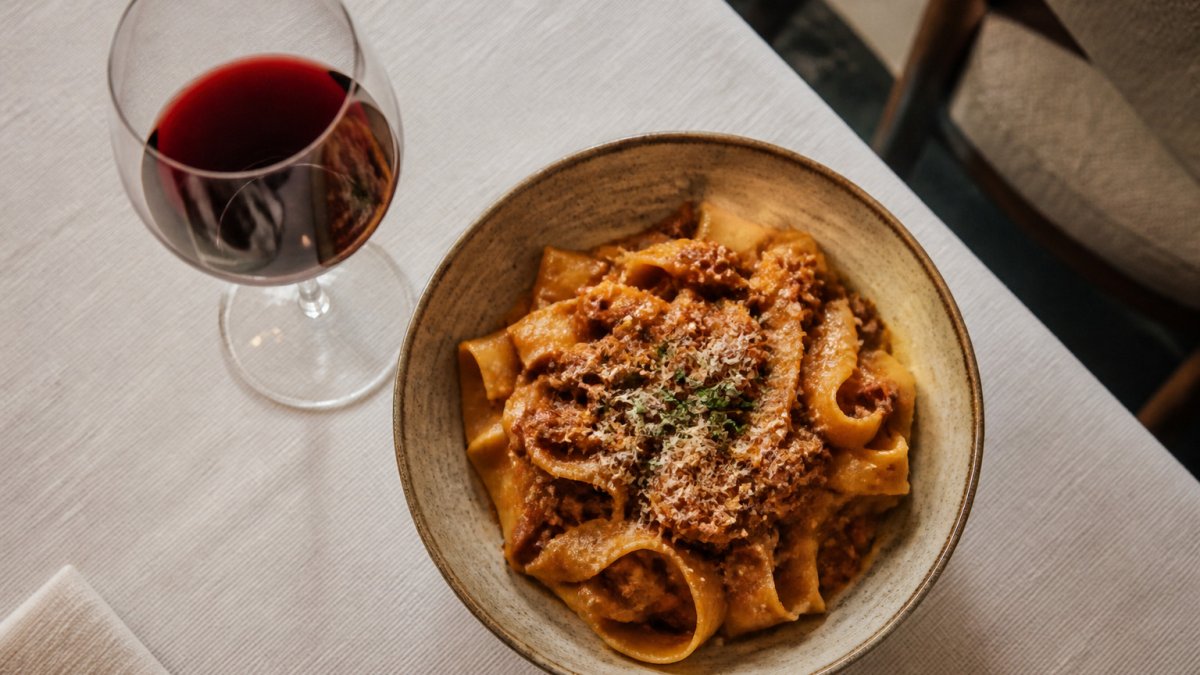
Think of the sauce as the lead and the wine as the supporting voice. If the sauce is bright and lemony, pick a white with similar acidity. If it's earthy and slow-cooked, a Sangiovese or a Barbera brings the same savory notes without fighting for attention.
Cream-based pastas are the exception to the usual rules. Fat softens tannin, so a medium-bodied white with good acidity cuts through the richness and keeps the palate fresh.
Best Wine with Tomato Sauce Dishes
Tomato is the most acidic ingredient most diners will encounter in an Italian restaurant, which makes it a useful guide. A wine that is less acidic than the tomato will taste flat and a little sour next to it. The safe move is a red with matching or higher acidity. Exploring the diverse terroir of various Italian wine tasting regions reveals how local soil and climate influence the natural brightness of these essential food-friendly grapes.
Sangiovese is the classic partner for tomato-based dishes, and it shows up across Tuscany for good reason. A Chianti or a Montepulciano d'Abruzzo offers the bright cherry fruit and firm acidity that suits marinara, pizza and baked pasta alike.
If you prefer something lighter, a Barbera or a chilled Valpolicella works well with tomato sauces that carry a bit of heat or basil. Avoid heavy, high-tannin reds with tomato-forward dishes. The tannins and the acid together can leave a metallic edge that no one enjoys.
Wine Pairing with Seafood Pasta and Fish Plates
Seafood calls for lighter wines, but "light" doesn't have to mean bland. The best whites for fish pair acidity with a touch of minerality, which lifts delicate flavors without masking them.
For shellfish pasta, a dry Vermentino or a Falanghina from southern Italy brings citrus and saline notes that echo the sea. With grilled or pan-seared fish, a Pinot Grigio from the Alto Adige or a crisp Verdicchio keeps the palate clean between bites.
Red wine can work with seafood too, but only with the right dish. A light-bodied red served cool, such as a Frappato, suits tuna or swordfish that's been grilled with olive oil and herbs. Heavy reds overwhelm almost every fish preparation.
Pairing Wine with Tiramisu and Italian Desserts
Dessert wines follow the same logic as savory pairings: the wine should be at least as sweet as the dish, or it will taste sour and thin. Tiramisu, with its coffee, cocoa and mascarpone, needs a sweet partner with some body.
Reserve →
Vin Santo is a natural choice. Its nutty, dried-fruit character complements the espresso and cream without competing with them. Moscato d'Asti, lighter and fizzy, works well for diners who want something refreshing after a rich meal.
For a bold finish, an Italian dessert wine such as Marsala can match the depth of chocolate and coffee flavors. Serve it in small pours, since the sweetness and alcohol build quickly.
Ordering Wine When You Share Several Dishes
Sharing plates is where most diners get stuck, because the table ends up with pasta, fish, meat and dessert all at once. The practical answer is to choose one versatile red and one versatile white, then adjust by course.
A medium-bodied Italian red, such as a Chianti Classico, handles many dishes, from tomato pasta to grilled meats. A dry white with good acidity, such as a Vermentino, covers seafood and lighter plates.
Watch out: ordering a heavy red before a delicate fish course can flatten the seafood entirely. Start light and move toward fuller wines as the meal progresses.
When the table orders a mix of dishes, a few versatile bottles cover most courses.
| Wine style | Suits | Why it works |
|---|---|---|
| Medium-bodied Italian red | Tomato pasta, grilled meats | Versatile across many dishes |
| Chianti Classico | Tomato-based dishes | Matches acidity |
| Dry white, good acidity | Seafood and lighter plates | Lifts delicate flavors |
| Vermentino | Seafood courses | Cuts through the richness |
| Heavy red before fish | Delicate fish courses | Flattens seafood flavor |
Booking Your Wine-Paired Dinner at Siena in Alpharetta
If you want to try these pairings in person, the easiest step is to plan the wine around the menu you choose.
To secure a table for a wine-focused dinner, reserve a table at Siena for a Mediterranean and Italian dinner in Alpharetta and mention any preferences when you book.
Pricing for wine and dinner varies with the bottles you choose, the number of guests and the courses you order, so please contact Siena Restaurant directly for current pricing or a quote.
Frequently Asked Questions
What wine pairs best with Italian food?
Italian food pairs well with wines that share its acidity and savory character. Sangiovese from Tuscany matches tomato-based dishes and grilled meats, while Pinot Grigio or Vermentino suits lighter pasta and seafood. Match intensity first: delicate dishes need lighter wines, rich braises and aged cheeses can handle fuller reds. When unsure, choose a wine that is high in acidity, since it cuts through olive oil and cheese without overpowering the food.
Which wine goes best with tomato-based pasta?
The best wine with tomato sauce is usually one with bright acidity that matches the tomato's tang. Chianti Classico and other Sangiovese-based reds are the classic choice, especially with meat sauces or baked pasta. For a lighter tomato dish, such as a simple marinara with basil, a crisp rosé or a Barbera works well. Avoid very tannic wines with tomato-heavy dishes, because the acidity in the sauce can make them taste harsh and metallic.
What wine should I order with seafood at an Italian restaurant?
For wine pairing with seafood pasta, reach for crisp white wines with good acidity and minimal oak. Vermentino, Verdicchio, and Sauvignon Blanc from Friuli all complement clams, shrimp, and white fish. Pair a lemony or herb-based seafood dish with a bright white, and a richer tomato-and-shellfish stew with a lightly chilled rosé. Serve wine at roughly 45 to 50 degrees Fahrenheit for whites so the flavors stay clean.
Can you pair red wine with fish?
Yes, but choose carefully. Light-bodied, low-tannin reds such as Pinot Noir or a chilled Gamay can work with salmon, tuna, or grilled fish. Heavy, tannic reds usually clash with delicate seafood and leave a metallic taste. If the fish comes with a tomato-based sauce, a fruit-forward Sangiovese can be a good match. When in doubt, a dry rosé offers a middle ground between red and white.
Should I ask the server for a wine pairing recommendation?
Yes. Servers at a chef-driven restaurant often know the menu well and can point you toward bottles that suit specific dishes and your budget. Tell them what you plan to order, your preferred style (crisp, fruity, or bold), and roughly what you want to spend.
Want to see the full pairing picture before you arrive? Browse the Siena menu for pasta, seafood and sharing plates, then explore the wine selection by the glass and by the bottle. Our team is happy to recommend a pairing for your table.